Hello! It's been a while since my last blog and so much has happened since!
My book, FOUR DEAD QUEENS is going to be published by Penguin Random House in the US! AHHHHHHHHHHHHHHHHHHHHHHHHH!!!
You can find out more about it here and add it to your TBR list. Please and thank you! 😀
My other big news is that I've launched my website which you can check out here:
I'll continue to blog over there and will be closing out this blog. If you want to continue to keep up-to-date with any news, book updates and awesome giveaways, please subscribe to my website here.
I hope to see you over on my new website! Please come by and say hello! 😀
Friday, 21 April 2017
Friday, 1 April 2016
The sparks of inspiration
The process of writing a book is different for all writers. Some begin with a character or a voice which begs to be written. But for me, it’s the whisper of a concept—either the idea of fictional world, or an impossible scenario my characters will find themselves in. And concepts never arrive full formed—how useful that would be!—but rather are fluid, morphing from one thought to another until something sticks.
This process of brainstorming, or daydreaming, can take months before I put fingers to the keyboard, making it difficult to remember exactly when or where an idea first struck. But for my latest book, I remember the light bulb moment with great clarity.
Around two years ago, my father and I were driving from Sydney to Melbourne when we passed a forest which had been destroyed by a bushfire. The gum trees were now black splinters against the blue sky, the earth turned gray, no life in sight. I couldn’t help but worry how many animals had lost their homes or perished in the fire.
And the devastation looked so fresh; the black of the bark still ink-dark with no emerald buds of life to be seen. I was sure I could smell smoke as we drove by, but my dad informed me the bushfire had been years ago. I was shocked and saddened that the trees would never regrow—branding the incident onto the landscape for all time.
This idea of a land striped of life sparked a story within me. A story which wouldn’t let go. And for the remainder of the trip, the concept unfolded in my mind. I began wondering what circumstances could’ve led to such a dry and desolate land. And, most importantly, how such a lifeless environment would impact a society forced to endure it.
And so my YA fantasy was born!
Monday, 21 March 2016
Don't judge a book by its map!
Ever since I was a child, I've loved maps. They weren’t merely a tool for visualizing a fictional land, but something tactile to help transport me into the world I was reading about. The maps further connected me to the story, allowing me to imagine how I would traverse the environments myself.
I mostly read adventure novels where kids would explore distant countries, different eras and far-off locales. The illustrated maps were my favourite part. I would study each and every detail carefully until the world felt as real as my own.
And often I would recreate the maps, so I could roll it into a scroll and carry it in my bag like a real adventurer. Below is a map I made around 8 years old based an Osborne Puzzle Adventure book. I honed my technique, including scrunching, ripping, burning edges and expertly spilling coffee so not to wash away the drawings.
During my travels over the years, I've collected every single guidebook or pamphlet if there was a map inside. My favourites were the Disney Park maps. And though the park doesn't tend to change significantly from year-to-year, I add to my collection upon each trip. For it seems, one can never have too many maps of the same park!
As I got older and began reading fantasy, I was thrilled to discover many included illustrations depicting the imaginary worlds. Many are undeniably works of art; such as the maps in the Grisha books by Leigh Bardugo (drawn by Keith Thompson). In fact, I’ve been known to buy a book simply due to the gorgeous map inside!
I dream of the day when I'm to open a book and find an intricate map designed around the worlds and words I've created, combining two of my passions: fantasy novels and maps.
I mostly read adventure novels where kids would explore distant countries, different eras and far-off locales. The illustrated maps were my favourite part. I would study each and every detail carefully until the world felt as real as my own.
And often I would recreate the maps, so I could roll it into a scroll and carry it in my bag like a real adventurer. Below is a map I made around 8 years old based an Osborne Puzzle Adventure book. I honed my technique, including scrunching, ripping, burning edges and expertly spilling coffee so not to wash away the drawings.
![]() |
| My map masterpiece! |
| Disneyland's 50th anniversary map has pride of place in my home. |
As I got older and began reading fantasy, I was thrilled to discover many included illustrations depicting the imaginary worlds. Many are undeniably works of art; such as the maps in the Grisha books by Leigh Bardugo (drawn by Keith Thompson). In fact, I’ve been known to buy a book simply due to the gorgeous map inside!
Reference: http://grishaverse.com/
The Grisha books are as wonderful as the stunning maps!
I dream of the day when I'm to open a book and find an intricate map designed around the worlds and words I've created, combining two of my passions: fantasy novels and maps.
Are you a collector? What are your prized trinkets? Please let me know in the comments.
Sunday, 1 November 2015
How to carve the perfect pumpkin, Disney-style!
Happy Halloween everyone! As you probably know,
Halloween is one of my favourite times of year. Although I grew up in
Australia, I spent some of my formative years in the USA, which is why I
believe Halloween is a justified celebration. In the States, we’d visit a pumpkin
farm and pick the perfect pumpkin, just like hunting for the perfect Christmas
tree.
Halloween is slowly becoming a recognized holiday in Australia and this year Coles, Woolworths and Aldi all sold
carving pumpkins. I couldn’t contain my excitement and bought a pumpkin two
weeks before Halloween. Inspired by a visit to Disneyland, where designers carved into the pumpkin’s skin without breaking through to the middle, I
decided to put my rusty carving skills to the test.
While I was happy with the results, this method wasn’t as easy as I’d thought! So yesterday I attempted my
second jack-o'-lantern, armed with the knowledge from my first effort. I thought I’d
document my process as many people asked how I made the first Disney castle jack-o'-lantern. So read on for tips! :)
Step one:
Find/create a stencil. I wanted to create Beauty
and the Beast’s enchanted rose as it’s one of my favourite Disney films and the
glass cloche would make for a perfect silhouette for the rose. Unfortunately,
there weren’t any free stencils online so I had to make my own. I designed the below
stencil in Photoshop from an image in the film:
Step two:
Cut out the stencil and stick it onto the
pumpkin with hobby glue. Some sites recommend drawing the stencil on the pumpkin’s
skin with a whiteboard pen, this seemed like it could wipe off too easily.
Hobby glue sticks well to the skin without sticking too well.
Step three:
Time to cut off the top of the pumpkin! For
this, I used my biggest knife, making sure to cut away from my hand. Note: make
sure you cut on an angle so the top doesn’t fall back through.
Step four:
The messiest part! Scoop out all the gunk
from the inside. I mostly used my hands and a small ladle. This takes time and
feels completely gross but it’s quite fun. If you have kids, this is the part they’d
enjoy!
Step five:
Now onto the carving! Cut a section along
the stencil with your smallest and sharpest knife. Create a small rectangle,
making sure not to cut straight through the pumpkin skin—only around 3mm into
the flesh. Next slide the knife under the skin. It will easily lift away,
leaving some of the flesh underneath:
Step six:
Continue cutting and lifting small sections
around the stencil. Don’t worry if it’s not all the same depth—as some will lift
easier and deeper than other sections.
Step seven:
When you’re finished cutting around the
stencil, use a sculpting tool to scrape at the exposed inner flesh to smooth it
out .
Step eight:
Remove the stencil and make any final
changes and additions. I added the outline of petals so the rose didn’t look
like a large blob!
Step nine:
Pop in a candle. And voila! Your jack-o'-lantern is ready for prime position in your home.
Did you make a jack-o'-lantern this year? What did you carve? I'd love to see pictures!
Tuesday, 22 September 2015
I'm still here... Are you?
Hello! It’s been so long. Is anyone still
out there? Well, this could get awkward… Me talking to myself…
Sorry it’s been so long since my last post,
but I have a good reason. I’ve been spending every moment I can on my next
book. It’s a YA fantasy (again, although epic fantasy this time) and it’s
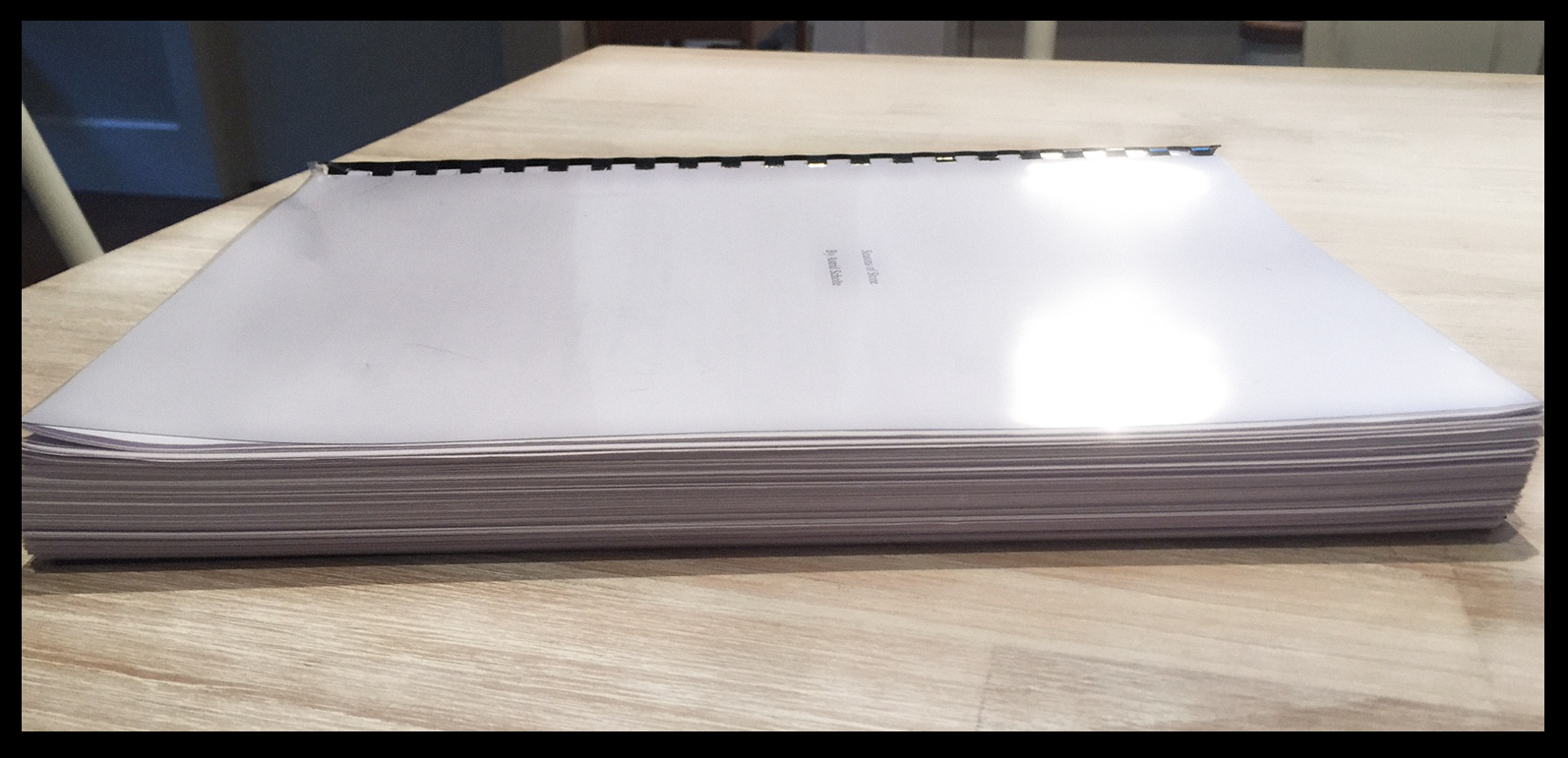
been all consuming. But the good news is I’ve finished! Huzzah!
I started my new novel during Nanowrimo (National Novel Writing Month)
as a side project, something to work on while I was querying agents with my other
manuscript. Then something happened. I couldn’t get the story, characters or
world out of my head. So I dove in headfirst, dedicating my spare time to
getting the story right, pummeling the pages (and keyboard) until those words
were something worth reading, enjoying, loving.
I then spent six months workshopping and
rewriting and editing and (mostly) banging my head against the wall. But now
it’s ready. Ready to be sent out into the world! Well, the world of agents,
that is. :)
And it’s a scary moment, but thrilling.
It’s the time when I obsess over whether it’s good enough. Whether the story
will sink or swim. Whether the last year of writing will be worth it. I think
it is, but only time (and agents) will tell.
So wish me luck friends! Back into the
querying trenches I go!
![]() |
| So many pages! |
Sunday, 10 May 2015
Review: A Court of Thorns and Roses by Sarah J. Maas
Title: A Court of Thorns and Roses
Pages: 432
Published: 01-05-2015 by Bloomsbury Australia
Source: Publisher
Pages: 432
Published: 01-05-2015 by Bloomsbury Australia
Source: Publisher
Synopsis (from publisher):
Feyre's survival rests upon her ability to hunt and kill – the forest where she lives is a cold, bleak place in the long winter months. So when she spots a deer in the forest being pursued by a wolf, she cannot resist fighting it for the flesh. But to do so, she must kill the predator and killing something so precious comes at a price ...Dragged to a magical kingdom for the murder of a faerie, Feyre discovers that her captor, his face obscured by a jewelled mask, is hiding far more than his piercing green eyes would suggest. Feyre's presence at the court is closely guarded, and as she begins to learn why, her feelings for him turn from hostility to passion and the faerie lands become an even more dangerous place. Feyre must fight to break an ancient curse, or she will lose him forever.
The start of a sensational romantic fantasy trilogy by the bestselling author of the Throne of Glass series. - See more at: http://bloomsbury.com/au/a-court-of-thorns-and-roses-9781408857861/#sthash.rbw3wOcO.dpuf
Review:
A Court of Thorns and Roses is a majestic tale of passionate romance, dark magic, brutal sacrifice, mysterious creatures and cursed kingdoms. Based on Beauty and the Beast, it is a strong start to a new trilogy by talented author Sarah J. Maas. It’s a tale that will capture you in its web, and refuse to let go—even beyond the final page.The novel begins with Feyre diligently providing for her family, which is often a thankless task, but she is the only one who capable of protecting them. In A Court of Thorns of Roses, a wall separates the mortal lands from Prythian, the faerie lands, and humans know better than to venture north or interfere with the dangerous and powerful faeries.
It’s not long before Feyre shatters the treaty between the lands by mistakenly killing a faerie in wolf form. Her punishment is to live above the wall in a High Fae’s estate, never to see her home or family again. Here she meets her “beast”, Tamlin—a faerie with a jeweled mask permanently attached to his face, a short temper, and who hides a cursed past.
Like Celaena Sardothien from Maas’s Throne of Glass series, Feyre is tough and often abrasive, but still empathetic. Although, I wished there had been a deeper connection to her family, as this would have made her punishment more poignant. The faerie characters of Tamlin, and particularly Lucien, were a delight. They were, at times, both animalistic and chivalrous, and their bejeweled masks added to the level of mystery and magic in the novel.
As I read on, Tamlin and Feyre became more than just characters on a page but people with real thoughts and feelings, and I feared for their future in a world that seemed to conspire against them. It is a rare book that manages to live and breathe between the pages, and A Court of Thorns and Roses was that kind of book for me, a testament to the strength of Maas’s writing.
Towards the end of the novel, the plot turns bleak and frequently bloody and brutal, yet it was all the more exciting for it. Sarah J. Maas’s imagination seems to know no bounds; her faerie world is equal parts beautiful and disturbing and I found myself wishing my time within this world would not end.
My one caution with this book would be that it is being shelved with other YA titles, where I believe it reads much more NA (New Adult). A Court of Thorns and Roses should be read by those looking for something a little darker, and steamier, than most YA novels.
Sarah J. Maas can do no wrong in my eyes. She has proven time and time again that she is a master of fantasy: building sumptuous worlds to be lost in, complex characters and unexpected plot twists and turns. I loved my journey into the world of Prythian, and cannot wait to return.
I give A Court of Thorns and Roses 5/5 stars.
*Many thanks to Bloomsbury Australia for the advanced readers copy.
Monday, 2 February 2015
Review: I Was Here by Gayle Forman
Title: I Was Here
Author: Gayle Forman
Pages: 270
Published date: January 2015 by Simon &
Schuster Australia
Source: Publisher
Synopsis (from publisher):
From the bestselling author of If I Stay -
this summer's YA blockbuster film.
This characteristically powerful novel
follows eighteen-year-old Cody Reynolds in the months following her best
friend's shocking suicide.
As Cody numbly searches for answers as to
why Meg took her own life, she begins a journey of self-discovery which takes
her to a terrifying precipice, and forces her to question not only her
relationship with the Meg she thought she knew, but her own understanding of
life, love, death and forgiveness.
A phenomenally moving story, I Was Here
explores the sadly all-too-familiar issue of suicide and self-harm, addressing
it in an authentic way with sensitivity and honesty
Review:
I’ve heard only good things about Gayle
Forman’s books, specifically for If I Stay,
which has been on my TBR list for a few years. It’s one of those books people
tend to gush about and even the I Was
Here proof copy included If I Stay
praise such as: “intensely moving” and “Forman knows how to write emotion”. So
I dove into I Was Here—with its
very similar sounding name—expecting comparable results. Unfortunately, I was
not as enraptured by the tale as I'd hoped to be.
Starting I Was Here after Meg’s suicide means we’re only told of Meg
and Cody’s friendship through dialogue and flashbacks. And while we only get a
glimpse of Meg, I felt invested in her story, wanting to know more about the
girl that had decided to take her own life. I
Was Here takes a rather dark turn about a third of the way through and I
felt more engaged with the mystery surrounding Meg’s suicide than Cody’s journey
through her grief. Why had Meg chosen to take her life? And why had she kept
her best friend in the dark about her depression?
Forman has a very distinct style, almost impassive and detached, in I
Was Here. This cleverly mimics Cody’s numb response to her best friend’s
suicide. It’s clear to the reader that this is just Cody’s
coping mechanism, and not related to her close connection to her best friend. We know that Cody is going to eventually break, and when she does, she’ll
shatter. Unfortunately though, this distance from her emotions for most of the novel, makes Cody difficult to relate to.
Where Meg leaps off the page, Cody feels
too removed from the reader. I understand Forman’s intention by writing Cody
this way, as this is the way she was dealing with her grief, however I felt like I needed more of her feelings, to feel immersed in the story. I wanted to cry with Cody. I wanted to get angry with
her. Unfortunately, I did neither.
I found I
Was Here a difficult book to read. It’s somber and sad and only a little
bit uplifting towards the end. There is an element of romance in the book, however
it felt unnecessary to the plot and was therefore not as meaningful as it could have been.
Yet there are many important messages in the
book, which shouldn’t be overlooked. To me, the most important message is to
not treat depression like an ugly secret, something to be hidden from friends
and family. Instead, depression should be dealt with openly—and without judgment.
I really admire Forman for tackling mental health issues in this way and she
navigates the tricky subject matter with care, without shying away from the
darker content.
While I
Was Here was not the book for me, I would recommend it to those who don’t
mind a more quiet, somber tale where the happily ever after is tainted by the
often harsh realities of the world.
*Many thanks to Simon & Schuster Australia for the advanced proof.
Sunday, 7 December 2014
Review: This Shattered World by Amie Kaufman and Meagan Spooner
Pages: 400
Published: November 2014 by Allen and Unwin
Source: Publisher
Review:
These Broken Stars by Amie Kaufman and Meagan Spooner was my favourite book of 2014. To say I eagerly awaited the sequel was an understatement. With my hopes set extremely high, I started reading This Shattered World with some trepidation. Could the sequel live up to its predecessor? I am happy to report that not only did This Shattered World match These Broken Stars in terms of reading enjoyment and satisfaction, but it surpassed book one with its level of world building, plot and complexity.
In This Shattered
World, Kaufman and Spooner focus on a war-torn planet: Avon. Avon is
noxious to its inhabitants: there are no visible stars, everything smells of
swamp and there’s something in the environment that incites an uncontrollable
rage. Only soldier Jubilee Chase and the colonists are immune
to this ‘Fury’. Added to this is a rebellion stirring within the
labyrinth-like swamplands, led by local boy Flynn Comarc. Flynn
demands answers as to why Avon has failed to terraform and thus left the locals
stranded in a semi-inhabitable planet. Soldiers, such as Jubilee, have been sent to
Avon to keep the peace. But when Jubilee and Flynn’s paths cross, the war heats
up—with Jubilee and Flynn caught in the middle.
I powered through This
Shattered World, revelling in the wonderful and complex world and likeable
3-dimensional characters. Kaufman and Spooner have a knack for creating immediately
engaging stories. The characters leap
from the page and the different planets' history and backstories are the
right blend of familiar and otherworldly. You can understand how tempers from
the locals would flare to the point of a rebellion, and how military would be
implanted to try and keep the situation under control. It’s this balance of the
familiar yet different that grounds This
Shattered World in reality, making the sic-fi genre accessible to
a wider audience.
I really enjoyed the military focus in This Shattered World. Where These
Broken Stars was a tale of the two protagonists’ survival, This Shattered World amps up the stakes,
the action and the intricacy of the world and its society. In These Broken Stars, much of the struggle
was internal, and while both Flynn and Jubilee also struggle with their
internal consciences and choices, it is the external conflict of the rebellion
and the planet with all its secrets, that drive the plot in This Shattered World.
The element of romance is not as central as in These Broken Stars, but there is more at
risk with Jubilee and Flynn’s forbidden attraction. The fact that Jubilee
quotes Romeo and Juliet in the first chapter mimics what is at stake for these
two star-crossed characters.
I’m not usually a fan of dual points of view, but
alternating chapters between Flynn and Jubilee lets Kaufman and Spooner delve
deeper into their characters, their thoughts and motivations. It fleshes them
out, and lets you empathise with both sides of the war. There are many of shades
of grey in This Shattered World—aside
from the main antagonist, who is plain evil—which is great to see in a novel
about war, albeit a fictional one. There is truth and deception on both sides,
and it fascinating to watch both characters evolve as they investigate the reality at the core of Avon's instability, both environmentally and socially.
I loved This Shattered
World. It’s an epic story
as well as intimate, personal journey for characters Jubilee Chase and Flynn
Cormac. I can’t wait for the final instalment in The Starbound Trilogy.
I give This Shattered World 5 out of 5 stars.
*Many thanks to Allen and Unwin for the advanced copy.
Monday, 8 September 2014
Review: Heir of Fire by Sarah J. Maas
Pages: 576
Published: 1/09/14 by Bloomsbury Publishing Australia
Source: Publisher
Synopsis (from publisher):
Lost and broken, Celaena Sardothien's only thought is to avenge the savage death of her dearest friend: as the King of Adarlan's Assassin, she is bound to serve this tyrant, but he will pay for what he did. Any hope Celaena has of destroying the king lies in answers to be found in Wendlyn. Sacrificing his future, Chaol, the Captain of the King's Guard, has sent Celaena there to protect her, but her darkest demons lay in that same place. If she can overcome them, she will be Adarlan's biggest threat – and his own toughest enemy.While Celaena learns of her true destiny, and the eyes of Erilea are on Wendlyn, a brutal and beastly force is preparing to take to the skies. Will Celaena find the strength not only to win her own battles, but to fight a war that could pit her loyalties to her own people against those she has grown to love?
Review:
Sarah J. Maas’s Heir of Fire is a fantastic novel written by
a truly captivating author. Always surprising, Maas’s writing transports you to another land that is rich in history and
culture. Previously, I would have classified the Throne
of Glass series as a 'low fantasy' despite its second world setting, however, Heir of Fire sits squarely in the epic fantasy
realm and has reignited my dormant love for the genre.
The world of Heir of
Fire is much more complex and diverse than touched upon in Throne of Glass. Maas has cleverly expanded her world with each book, allowing her to delve deeper into her mythology
and the characters she’s created, without overwhelming the reader with backstory.
While Throne of Glass was a more personal journey of Celaena’s transition from slave to Adarlan’s Champion, Heir of Fire explores the broader scope of Erilea’s people and their dark history. The grand locales, various regions, cultures and magic systems are completely immersive. There's not a moment that lags, which is impressive considering the novel’s length.
While Throne of Glass was a more personal journey of Celaena’s transition from slave to Adarlan’s Champion, Heir of Fire explores the broader scope of Erilea’s people and their dark history.
Celaena is unlike any YA protagonist I’ve read before; she’s
often foul-mouthed, ill-tempered yet fragile and broken. Heir of Fire is particularly satisfying due to Celaena’s character
arc. She was left shattered by the events of Crown of Midnight, and none of these events are forgotten in Heir of Fire. These
events drive Celaena’s actions, they become a part of
her. It’s thrilling to watch her journey unfold and witness the empowering rebirth of a hero.
While some could argue that the new characters in Heir of Fire dilutes the reader’s
connection to the main protagonists: Chaol, Dorian and Celaena, Maas has the knack for rendering
complete, flawed and empathetic characters where each addition improves upon
the diverse cast. My favourite new character was Manon Blackbeak, a witch
with iron teeth and claws who’s ruthless in her ambition to lead her clan. The cinematic
chapters detailing the witches trials to train their Wyverns, dragon-like
creatures, are so distinctive it’s as though Manon has clawed her way into Heir of
Fire, regardless of Maas’s original plans. Manon is a fresh and wonderful
addition to the Throne of Glass world and I can't wait to see where she journeys next.
I have to admit, I missed the main romantic thread that was
dominant in Throne of Glass and Crown of Midnight. Heir of Fire is a darker book, with serious themes of loss and
sacrifice. Instead of focusing on romance, Maas’s shifts to follow the budding friendship between Rowan and Celaena. Their relationship is a kind of love story that slowly unfolds and it is a
joy to observe—this is what it feels like to read Maas’ novels, as if you are
witnessing the dynamics of real, flesh and blood people as opposed to reading the stories of fictional characters.
Heir of Fire is an
outstanding entry in the Throne of
Glass series, there are no symptoms of the dreaded mid-series slump here. My only complaint is that I must now wait a year or so until I discover the fates of all the beloved characters—both new and original.
*Many thanks to Bloomsbury Publishing Australia for the advanced reader copy.
Subscribe to:
Posts (Atom)